

CaMKII autophosphorylation is the only enzymatic event required for synaptic memory.
2024.06.18Chen, X., Cai, Q., Zhou, J., Pleasure, S. J., Schulman, H., Zhang, M., & Nicoll, R. A. (2024). Proceedings of the National Academy of Sciences, 121(26), e2402783121.
Ca2+/calmodulin (CaM)-dependent kinase II (CaMKII) plays a critical role in long-term potentiation (LTP), a well-established model for learning and memory through the enhancement of synaptic transmission. Biochemical studies indicate that CaMKII catalyzes a phosphotransferase (kinase) reaction of both itself (autophosphorylation) and of multiple downstream target proteins. However, whether either type of phosphorylation plays any role in the synaptic enhancing action of CaMKII remains hotly contested. We have designed a series of experiments to define the minimal requirements for the synaptic enhancement by CaMKII. We find that autophosphorylation of T286 and further binding of CaMKII to the GluN2B subunit are required both for initiating LTP and for its maintenance (synaptic memory). Once bound to the NMDA receptor, the synaptic action of CaMKII occurs in the absence of target protein phosphorylation. Thus, autophosphorylation and binding to the GluN2B subunit are the only two requirements for CaMKII in synaptic memory.
- Recommend
-
2025-10-22
IQSEC2/BRAG1 may modulate postsynaptic density assembly through Ca2+-induced phase separation.
-
2025-08-22
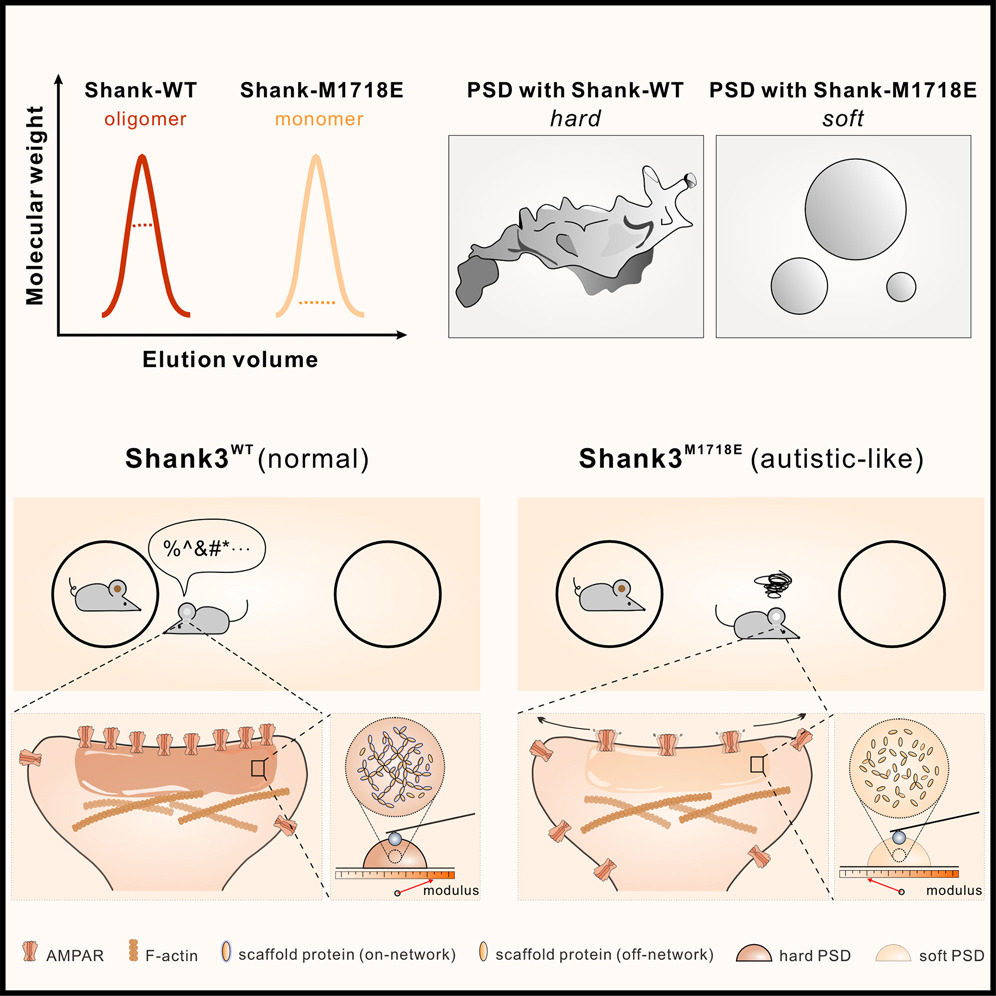
Shank3 oligomerization governs material properties of the postsynaptic density condensate and synaptic plasticity.
-
2025-08-21
Modulating synaptic glutamate receptors by targeting network nodes of the postsynaptic density condensate.
-
2025-08-19
Current practices in the study of biomolecular condensates: a community comment.
-
2025-06-10
Phase separation instead of binding strength determines target specificities of MAGUKs.